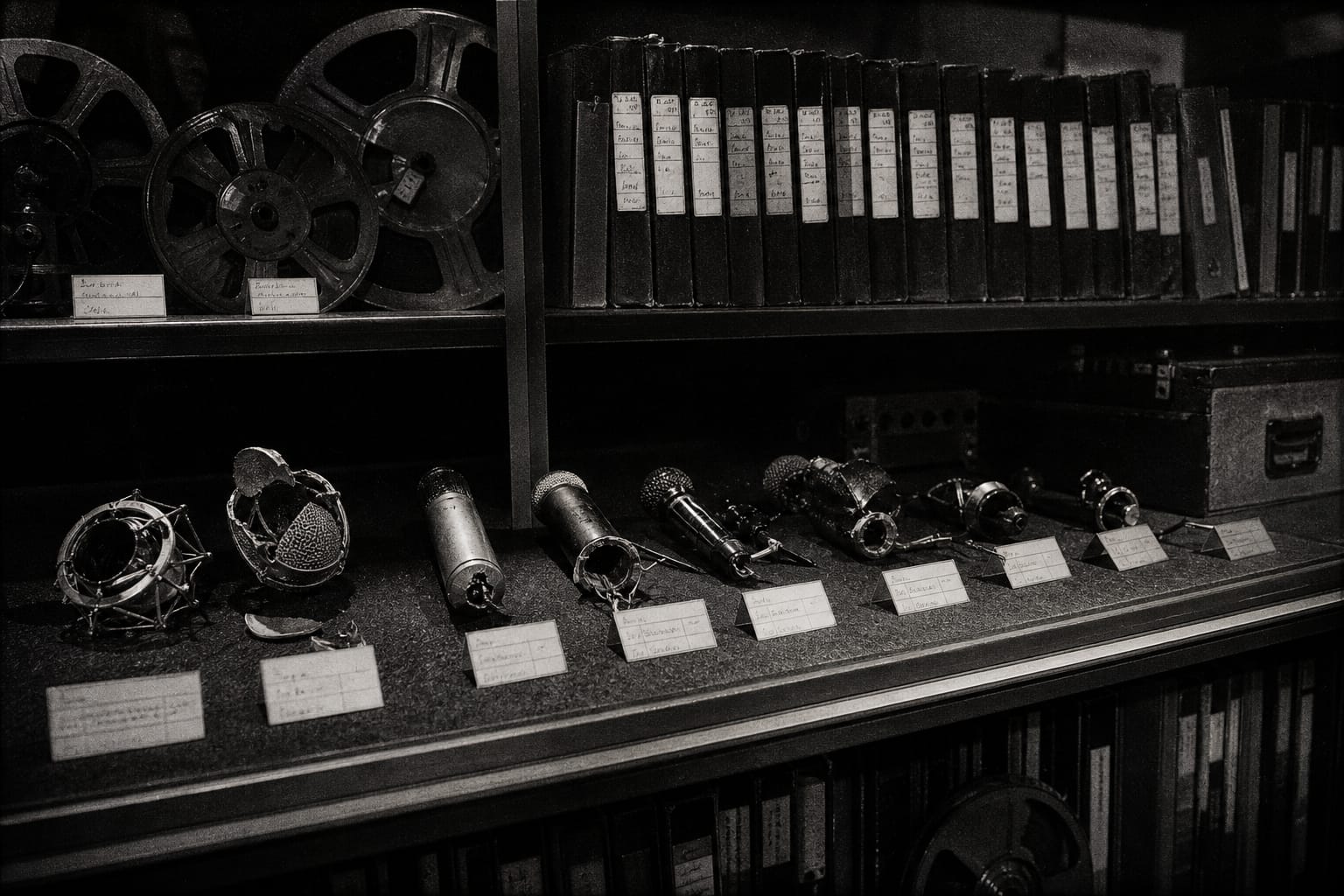
The Failure Museum
The Failure Museum: a taxonomy of vocal artifacts
Doubling ghosts, syllable smear, the choir that nobody ordered. Idris Kanu catalogs the five ways generated vocals fail, and the repair that works for each.
Idris Kanu · 2026-07-22 · 9 min
Every failed generation teaches you something a keeper cannot. I keep mine. This is the vocal wing of my personal failure museum: five recurring artifacts, how to hear them early, and what actually repairs them, tested across roughly 300 generations this year.
- 1. Doubling ghost
- A phantom second voice shadows the lead a few cents off. Repair: ask for 'single dry lead vocal, no doubles' and mix wet later.
- 2. Syllable smear
- Consonants melt across beat boundaries. Repair: shorten lines in the lyric box; the model smears when lines exceed the bar.
- 3. The uninvited choir
- A pad-choir blooms behind the hook. Repair: exclusion list must literally contain 'choir' and 'backing vocals'.
- 4. Vowel drift
- Sustained vowels wander pitch like a slow siren. Repair: regenerate; editing rarely saves it. Accept ~1 in 6 loss rate.
- 5. Accent collapse
- A specified accent decays mid-verse. Repair: name the city, not the country, and keep it named in the style field.
“Distinguish regenerate from repair from re-record. Most people mix them up and waste a week.”
The rule I give students: artifacts of timing get edited, artifacts of timbre get regenerated, artifacts of performance get re-recorded by a human. The generated vocal is a demo singer with infinite patience and no pride. Treat it accordingly.
If the take grooves and the voice fails, keep the take. That is not a failure. That is a band waiting for its singer.
Brick Lane Heat
88 BPM · E♭ min · 3:10A keeper whose generated vocal was replaced entirely. The swing is the machine's; the voice is mine.
Independent educational resource. Not affiliated with or endorsed by Suno, Inc. Suno is a trademark of Suno, Inc.